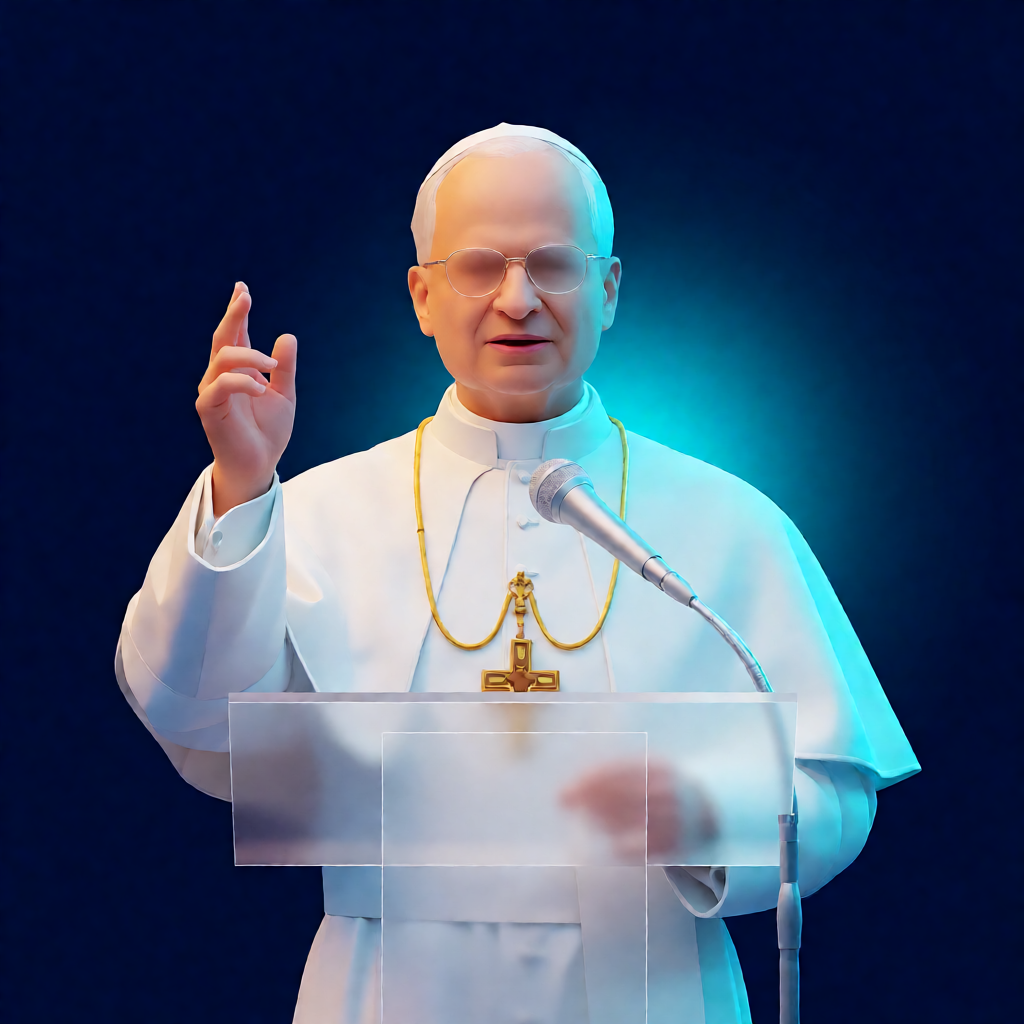
Pope Leo XIV Says AI Art Lacks “the Spark of Humanity”
In a bold move that caught everyone off guard, newly crowned Pope Leo XIV just took aim at AI-generated art. The Vatican’s first American pope — Robert Francis Prevost, who ascended to the throne back in May 2025 after years as a missionary in Peru — penned a scathing critique that’s already stirring conversation across both religious and tech circles. Honestly? It’s kinda wild to see the Catholic Church weigh in this directly on the ethics of generative technology. Look, AI art isn’t exactly new, but when it comes from the top of one of the world’s most powerful institutions, man, it hits different. You know, for real, I didn’t expect the Vatican to be so upfront about this stuff.
So here’s what went down. Leo XIV argued there’s a fundamental gap between genuine art and what machines churn out. He wrote that “there is an ontological difference, even before an aesthetic one, between art and what a machine can generate through statistical calculation based on millions of images created by others.” No joke, he basically said algorithms just don’t carry that essential human spark. That’s a pretty big statement when you consider how many AI tools now let anyone with a browser spit out convincing artwork in seconds. The thing is, his concern isn’t just about taste — it’s deeper than that. It’s about where human creativity ends and mechanical pattern-matching begins.
This whole debate hits hard, especially now that more and more people are exploring what AI tokens actually mean for creators worldwide. Big-name models from companies like OpenAI, Google, and Anthropic are getting better every single month, and the line between human-made and machine-made keeps blurring. If you’re curious about the landscape of AI models on the market, you’d find plenty that can produce stunning visuals — but will they ever truly capture what makes art human? We’ll see where this goes. Seriously, no one really knows yet.
- The Vatican’s official stance could shape how religious communities and broader society view AI-generated content for years to come.
- Leo XIV’s background as a missionary in Peru adds weight to his perspective — he’s seen firsthand how art reflects real human experience and struggle.
- The timing is major: as AI image tools become wildly accessible, a high-profile critic from the Catholic Church could influence policy, education, and creative industries alike.